


EXPLORE PARADISE
FIND ADVENTURE
Visit
Travel
Experience
“Discover More”, “Come Explore”, and “Uncover Wonders”
Local Tour Guide
Island Hopping
Private & Group Tours
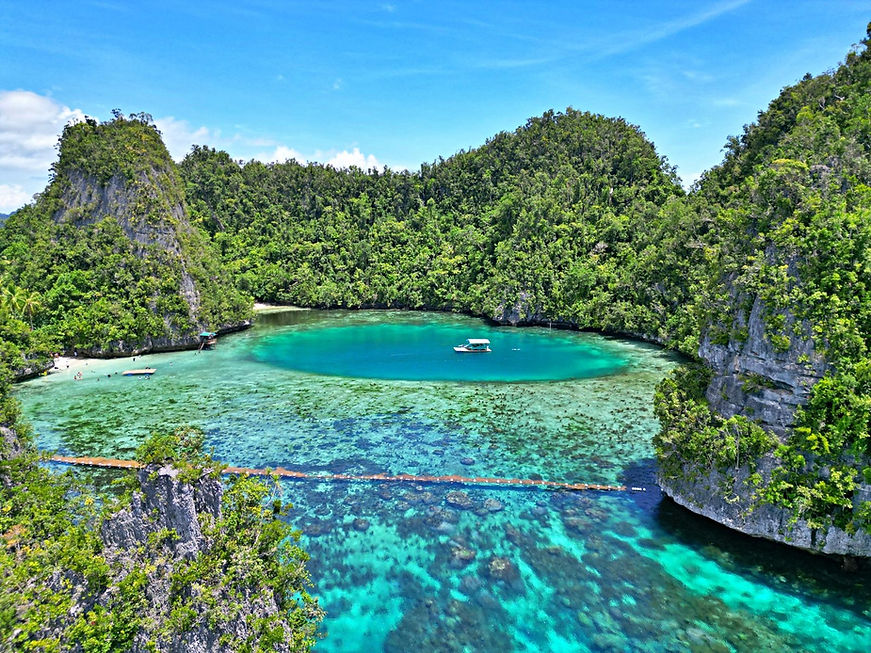
The Dinagat Islands is an island province located in the northeastern part of Mindanao, Philippines. Bordered by the Philippine Sea to the east and the Surigao Strait to the west, the province is renowned for its dramatic limestone formations, pristine beaches, rich marine ecosystems, dense forests, and abundant mineral resources. Its unique landscape and strategic location have shaped both its natural heritage and historical development.

The Origin of the Name "Dinagat"
According to local folklore, the name Dinagat originated from the union of two legendary tribal leaders—Princess Dina of the northern tribe and Datu Gat of the southern tribe. Their marriage ended a long-standing conflict between their communities and symbolized peace and unity throughout the island. Combining their names, Dina and Gat, gave rise to the name Dinagat, a story that continues to be passed down through generations as part of the province's cultural heritage.
Early Settlement and Spanish Period
Long before Spanish colonization, the islands were inhabited by indigenous communities that depended on fishing, farming, and maritime trade. During the Spanish colonial era, Dinagat became part of the Province of Surigao.
The Municipality of Dinagat was formally established in 1781, with its civil administration becoming more organized by 1830 under Spanish colonial authority. As the population increased, new settlements gradually emerged across the islands.
Growth of Municipalities
The territorial organization of the islands continued to evolve during the twentieth century.
-
Loreto was established on January 1, 1919, separating the northern portion of the original Municipality of Dinagat.
-
Cagdianao became a municipality on December 23, 1959.
-
Libjo was established on February 29, 1960.
-
Basilisa (formerly Rizal) became a municipality in 1967.
-
Tubajon followed in 1969.
-
San Jose, formerly known as Puyange, became a municipality in 1989 and later served as the provincial capital.
Together, these municipalities laid the foundation for the modern administrative structure of the Dinagat Islands.
World War II
The Dinagat Islands played a strategic role during World War II because of their location near the Battle of Surigao Strait, one of the largest naval battles in history. In October 1944, Allied forces landed in the Municipality of Loreto during the campaign to liberate the Philippines from Japanese occupation. The landing site at Sitio Campintac, Panamaon became known as Black Beach No. 2, marking the islands' contribution to the liberation of Mindanao.
Economic and Community Development
During the latter half of the twentieth century, Dinagat Islands experienced significant social and economic growth. Improvements in transportation, education, healthcare, agriculture, fisheries, and public infrastructure gradually transformed many communities.
The province is also recognized for its rich deposits of nickel and other mineral resources, making mining one of its major economic industries. Alongside mining, fishing, farming, eco-tourism, and small-scale enterprises continue to provide livelihoods for many residents.
Becoming a Province
For many years, the municipalities of Dinagat Islands remained under the jurisdiction of Surigao del Norte. Efforts to establish a separate province eventually led to the passage of Republic Act No. 9355, signed into law on October 2, 2006.
Following a successful plebiscite held on December 2, 2006, Dinagat Islands officially became the 80th province of the Republic of the Philippines. Although its provincial status was challenged before the Supreme Court, the Court ultimately upheld the constitutionality of the law in 2012, permanently affirming Dinagat Islands as an independent province.
Dinagat Islands Today
Today, the Province of Dinagat Islands consists of seven municipalities:
-
Basilisa
-
Cagdianao
-
Dinagat
-
Libjo
-
Loreto
-
San Jose (Provincial Capital)
-
Tubajon
Known for its extraordinary natural beauty, rich biodiversity, colorful cultural traditions, and resilient communities, Dinagat Islands continues to develop as an emerging destination for eco-tourism, sustainable resource management, and cultural heritage preservation. The province remains a symbol of unity, resilience, and the enduring spirit of its people.